
The power advantage of e-paper display technology
5 things you need to know. As transit operators modernise passenger information infrastructure, power consumption…
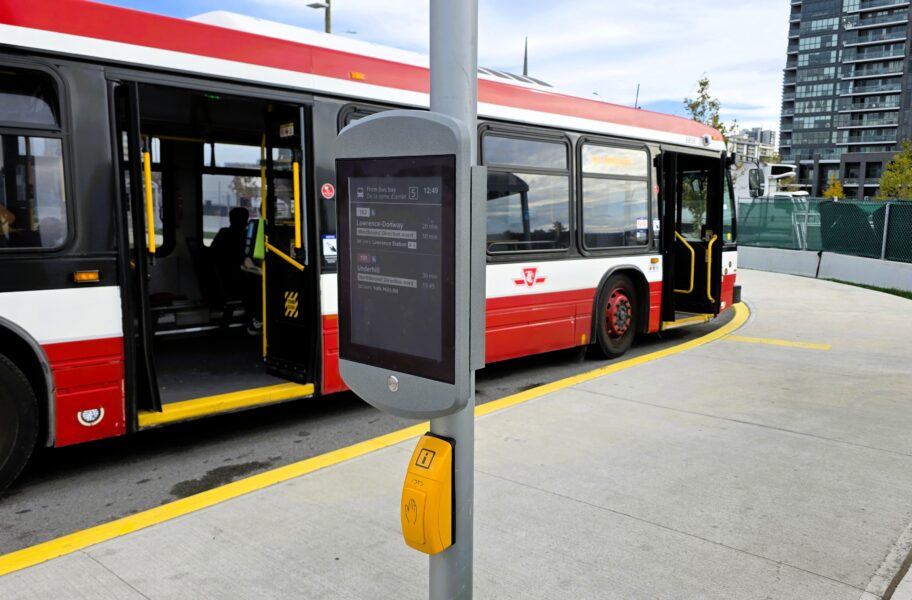
Real-time passenger information in Toronto is getting more colourful.
The Toronto Transit Commission (TTC) has introduced colour e-paper displays as part of its ongoing programme to modernise real-time passenger information across the city – in what is believed to be one of the first deployments of colour e-paper passenger information displays in Canada.
Delivered by CP-Stoneman in partnership with Papercast, the deployment includes Papercast 13-inch colour e-paper displays using E Ink Kaleido 3 technology, alongside 13-inch greyscale displays already forming part of the wider passenger information solution.
It marks another step forward for a programme that is already bringing live arrival information, service updates and disruption notices directly to TTC stops and stations – and opens up new possibilities for how that information can be communicated.
Earlier in 2026, Papercast and CP-Stoneman worked with TTC to expand access to real-time passenger information ahead of FIFA World Cup 2026, when Toronto welcomed visitors from around the world.
The World Cup provided an important milestone, but the programme was designed to deliver benefits long after the tournament had finished. The introduction of colour shows how the platform can continue to evolve as TTC explores new ways to make information more useful and accessible to passengers.
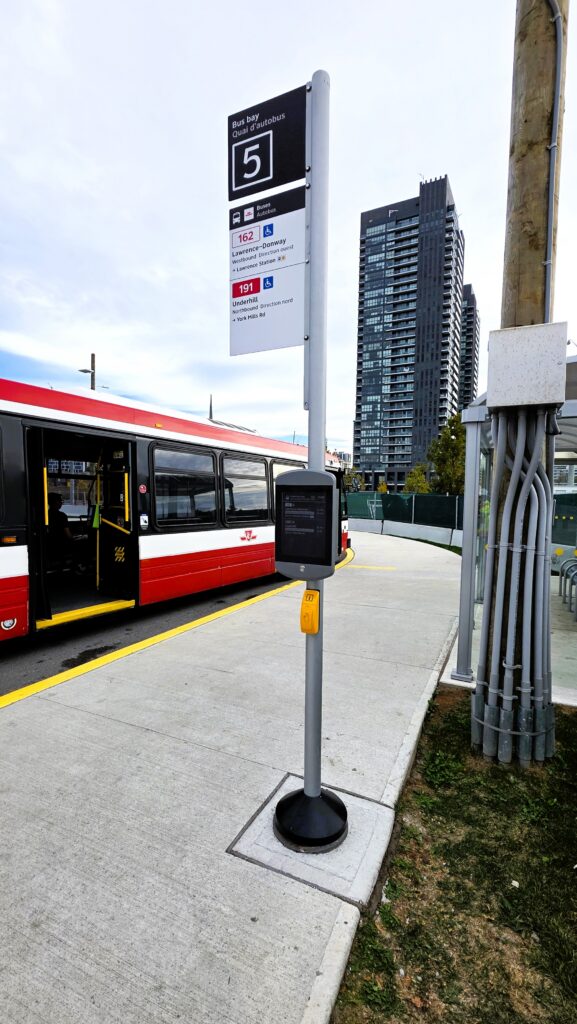
For passenger information, colour is much more than a visual upgrade.
Public transport networks already use colour extensively to help people navigate. Applied to digital passenger information, it can create clearer visual hierarchy, distinguish routes and different types of information, highlight important service messages and incorporate familiar wayfinding and branding.
That means passengers can more quickly identify what matters to them, while transit agencies gain greater flexibility over what they communicate and how they present it.
Crucially, these capabilities can be introduced while retaining the characteristics that make e-paper particularly well suited to transit environments.
Papercast displays have very low power requirements and can operate using solar energy or long-life batteries. This means real-time information can be introduced at stops without the cabling, trenching and access to fixed power that can make conventional digital displays more complex and costly to install.
Content is managed remotely through a cloud-based content management system, allowing information across the network to be updated without physical intervention at individual stops.
The Toronto solution also incorporates an accessibility push button with text-to-speech functionality, providing audible passenger information in both English and French.
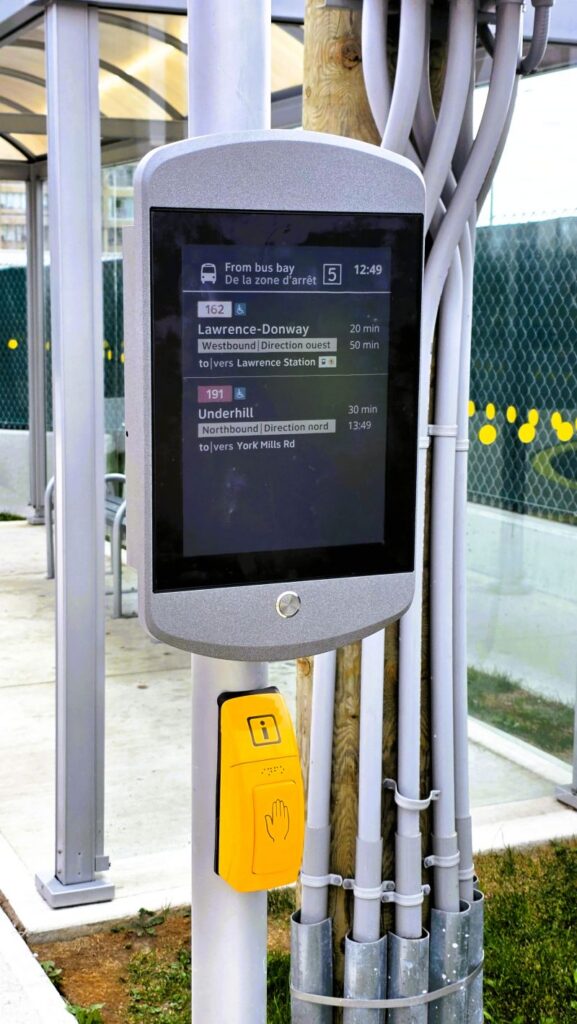
The combination of colour, real-time information and remote content management creates opportunities to do more with the humble bus stop.
For TTC, it represents another stage in the evolution of a passenger information programme designed to make live travel information more accessible across Toronto’s transit network. For the wider transit industry, it demonstrates how e-paper is continuing to evolve – expanding what agencies can communicate without adding the power and installation requirements associated with traditional digital infrastructure.
David Barker, CEO at Papercast: “Colour represents an important evolution in e-paper for public transport. t gives transit agencies greater flexibility in how they present information – making important messages easier to identify and enabling richer use of route, wayfinding and branding conventions – while retaining the practical advantages that make e-paper so well suited to transit. With very low power requirements and the ability to operate off-grid, displays can be installed quickly without the cabling, trenching and access to fixed power that can make bringing real-time passenger information to every stop difficult and expensive. It’s exciting to see colour now adding another dimension to what can be delivered in Toronto, building on the work we’ve already delivered with TTC and CP-Stoneman.”
As transit agencies look to extend real-time information to more of their networks, colour adds another dimension to what can be delivered at the stop – without changing the fundamental economics and simplicity that make e-paper possible in the first place.
5 things you need to know. As transit operators modernise passenger information infrastructure, power consumption…

Meet David Barker, CEO David Barker became CEO of Papercast at the beginning of 2026,…